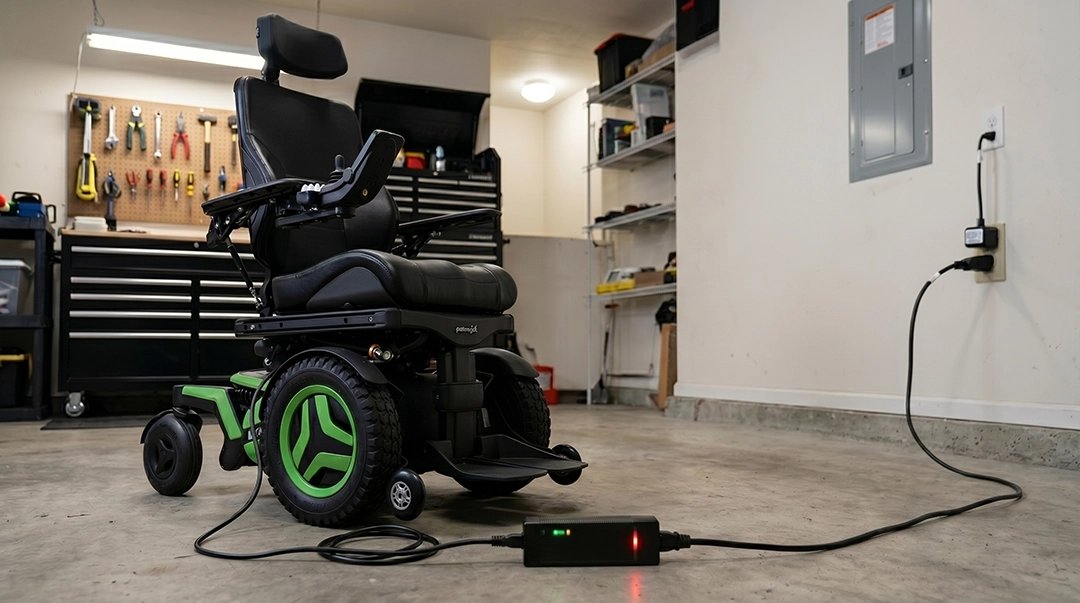
If your power wheelchair suddenly stopped charging, you're not alone. This is one of the most common issues owners of Pride Mobility, Permobil, Invacare, Quantum, and Quickie chairs face at some point. The good news — in many cases it's fixable without spending a fortune.
Start with the obvious: the outlet and the charger
Before assuming the worst, check the basics. Plug something else into the same outlet to confirm it's working. Then inspect the charger cable for any visible damage — frayed wires, bent connectors, loose plugs. A faulty charger is one of the most common culprits, and replacing it is far cheaper than replacing the battery.
Check the battery terminals
Over time, the terminals connecting the battery to the wheelchair accumulate dirt and corrosion. This buildup blocks the flow of electricity and prevents proper charging. Turn the chair off, gently clean the contacts with a dry cloth, and if there's visible corrosion, use a small amount of baking soda dissolved in water applied with a toothbrush. Let everything dry completely before reconnecting.
The battery may be too deeply discharged
This is where things get more technical — and more interesting. When a battery sits unused for a long period, its voltage can drop so low that the standard charger simply doesn't recognize it. Most chargers are designed to detect a minimum voltage before initiating a charge cycle. If the battery drops below roughly 10–11 volts, the charger sees nothing and does nothing.
Battery age and lifespan
Most sealed lead-acid batteries — the type used in the majority of power wheelchairs including Invacare and Drive Medical models — last between 18 and 24 months under regular use. Lithium-ion batteries found in higher-end Permobil and Quickie chairs last longer but still degrade over time. If your battery is past that window, no amount of troubleshooting will fix it. Replacement is the only path forward.
Signs that the battery is at the end of its life:
- The wheelchair cuts out suddenly during use
- It runs out of power much faster than before
- It charges to full but dies within minutes
Check the wiring and controller
If the charger is fine, the terminals are clean, and the battery tests at a normal voltage but still won't charge — the issue may be inside the chair's electrical system itself. Loose wiring or a faulty controller can block the current from ever reaching the battery. This usually requires a technician.
Proper charging habits that prevent problems
A few things that significantly extend battery life: charge after every use, don't let the battery drain to zero, avoid storing the wheelchair in extreme heat or cold, and always use the charger that came with your specific model. Using an incompatible charger can damage the battery permanently.
Not worth the repair cost?
Sometimes the math just doesn't work out. A new battery for a Permobil or Quantum chair can run $200–$400. Add labor, potential controller issues, and the age of the chair — and the repair costs more than the wheelchair is worth.
If you're at that point, you don't have to let it sit in the garage. Buddy Cash buys power wheelchairs across Florida — working, non-working, or anything in between. We come to you, inspect on the spot, and pay the same day. No need to haul it anywhere. Just reach out and we'll take it from there.